
 UK Time Trial Events




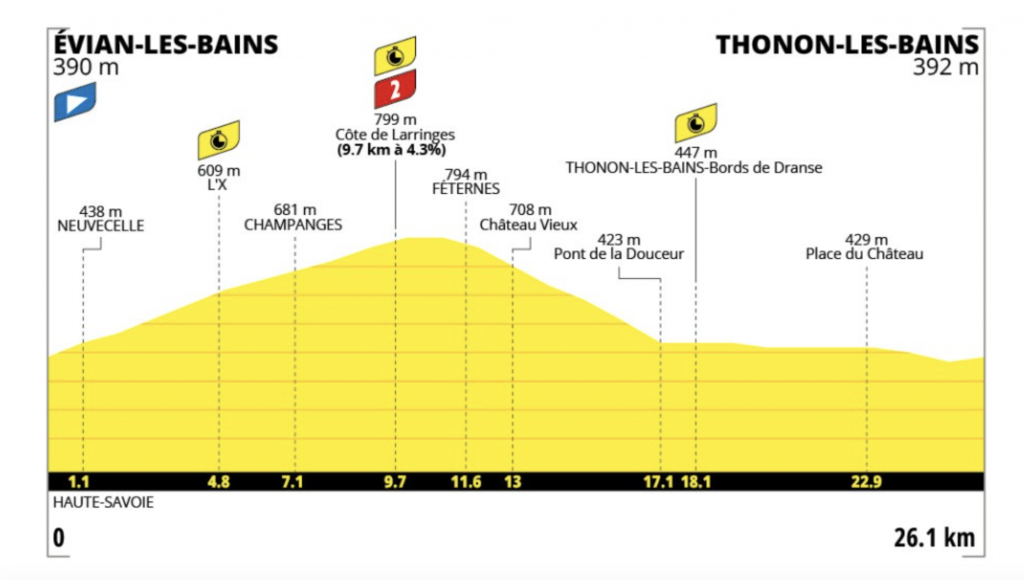
The second race against the clock has just taken place in this year’s Tour de France and it was an interesting watch from the perspective of an amateur time trialing enthusiast. The course started in Évian-les-Bains and was relatively short at only 26.1km in length, but the terrain made it truly challenging. The first 10km was completely uphill, with riders ascending the Côte de Larringes (a 9.6km climb at an average 4.2% gradient, though in real terms it was 9km at 5% then a plateau). From there, the road went back down again into a rolling, net downhill run-in to the finish in Thonon-les-Bains.
The synopsis was simple – a hard climb, a fast descent then a flat-ish bit. Watching the riders prepare and execute their races, as well as a little bit of insider knowledge, we took away some tips from watching the pros that can help you prepare for your next time trial.
The race played out as we might expect, the hilly course proving too difficult for the time trial specialists. World champion Remco Evenepoel stormed to victory, stopping the clock in 32:19 to claim his second stage win in a row with what we think might be the best time trial performance in history.
1. The harder the effort, the harder the warm up
The club 10 is a staple in basically every single myWindsock user’s diet and, while this race was a little longer than 10 miles, it was a similar-ish duration. One thing we noticed from the images of the riders preparing is how hard they looked like they were going on the turbo.
Riders interviewed afterwards were talking about how hard they went on the climb, with one saying his plan was to do the first 10 minutes at over 550W.
The harder the race, the harder the warm up should be – especially in instances like this, with a fast start. Riders were doing around an hour in some cases, though the literature suggests this isn’t necessary. Some time in each energy system progressively with one or two 15s efforts at the end is probably all you need, but don’t be afraid to go very hard, pop a gel afterward to replenish your depleted glycogen stores.
2. Don’t pace it evenly
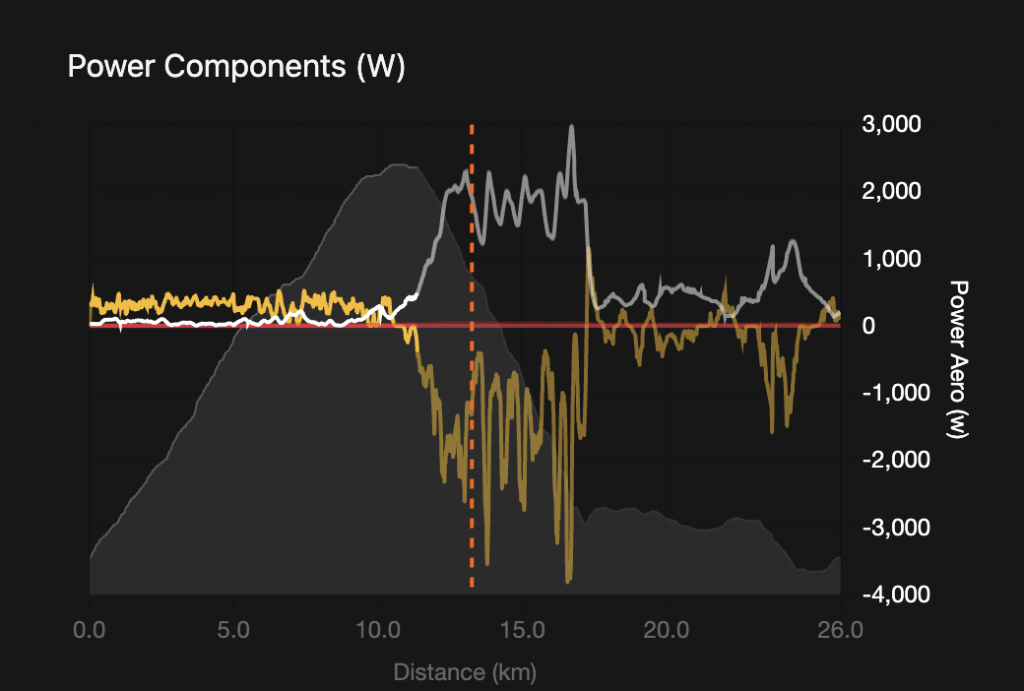
The hard climb at the start takes us nicely onto the fact you should not pace any time trial evenly unless it’s a dead straight line with no elevation, corners or speed changes – and even then you should ride hard at the start to accelerate yourself. In order to simulate Remco’s 32:19 on this course, we had to input some obscene numbers. The average power we estimated for him on this course is around 405W, though this is heavily weighted in the first half of the course.
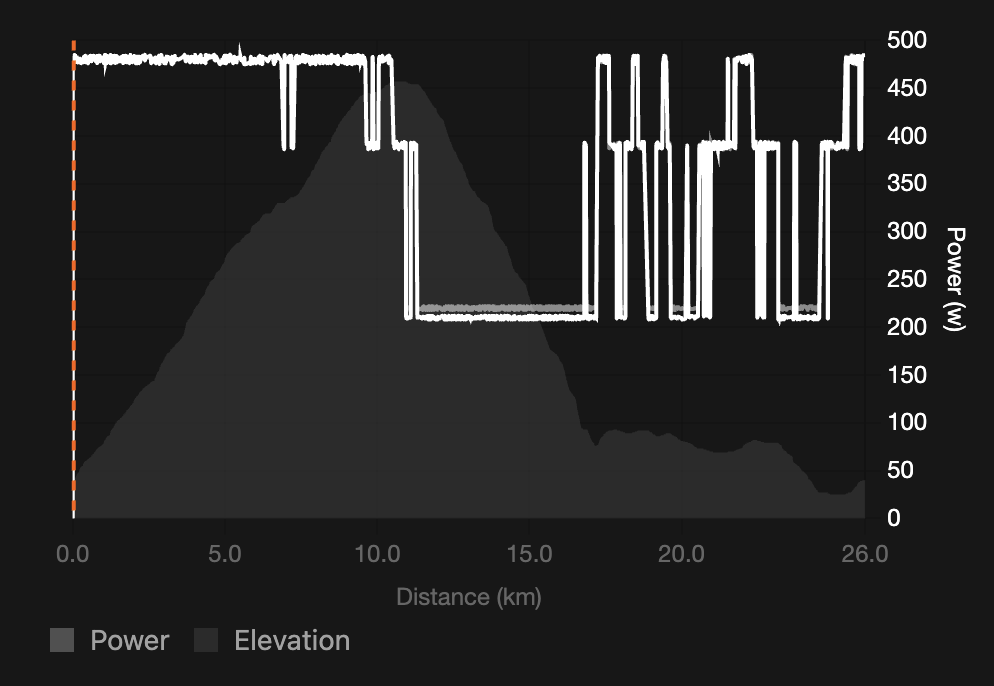
If we take that same average power of 405W but just ride a flat pace over the course, with other conditions all exactly the same, the time predicted comes out as 34:15, just shy of two minutes slower!
3. Climb in the TT bars – even when going slowly
All of the top riders rode the climb hard, but stayed in the bars. There was no standing up and swinging the bike around underneath them.
4. Use myWindsock to prepare
A quick look on Strava after every stage will show you that a decent proportion of the World Tour peloton are using myWindsock. We also know that many of the teams are using it to prepare for time trials and road stages. If you want to be as the best – click here.
