
 UK Time Trial Events




Tour de France Femmes 2026 Route stage 4 preview: Gevrey-Chambertin – Dijon. The race’s only individual time trial and the only course preview that takes account of the weather!
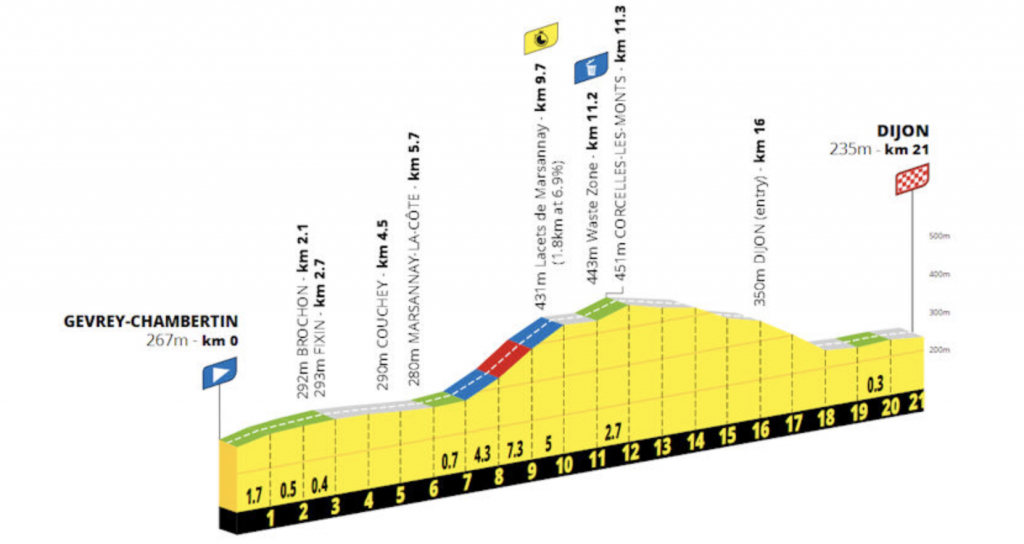
The first major GC shakeup is expected in the first stage of the Tour de France Femmes in the TT that takes place in the land of mustard, finishing in Dijon.
For the first 7 kilometres, the riders head straight towards Dijon. A left-hand turn in Marsannay-la-Côte takes the riders onto a false-flat drag uphill. Gradually, the gradient increases until they reach the climb proper. This is the Lacets de Marsannay, officially a 1.8-kilometre climb averaging 6.9%, although it is perhaps more accurately described as a 3-kilometre drag averaging 5.7%. This TT’s profile is not dissimilar from the men’s ITT stage a couple of weeks back, where we saw Remco Evenepoel deliver a clinic in how to time trial on a 5% gradient.
The route continues on rolling terrain for another 2 kilometres or so, before a 6-kilometre descent takes the riders to Dijon. There are no bends to speak of in this section, allowing the riders to descend at breakneck speeds and make full use of gravity. The descent will take place in the aero bars – important for assumptions for our prediction. The race finishes in the city centre of Dijon.
What will it take to win it?
Last year’s Tour de France Femmes was without a time trial (which should be illegal), however three years ago there was a similarly profiled lumpy TT in which Reusser prevailed. This year, our opinion is that Vollering will take victory, however we’re going to forecast what it’ll take to win.
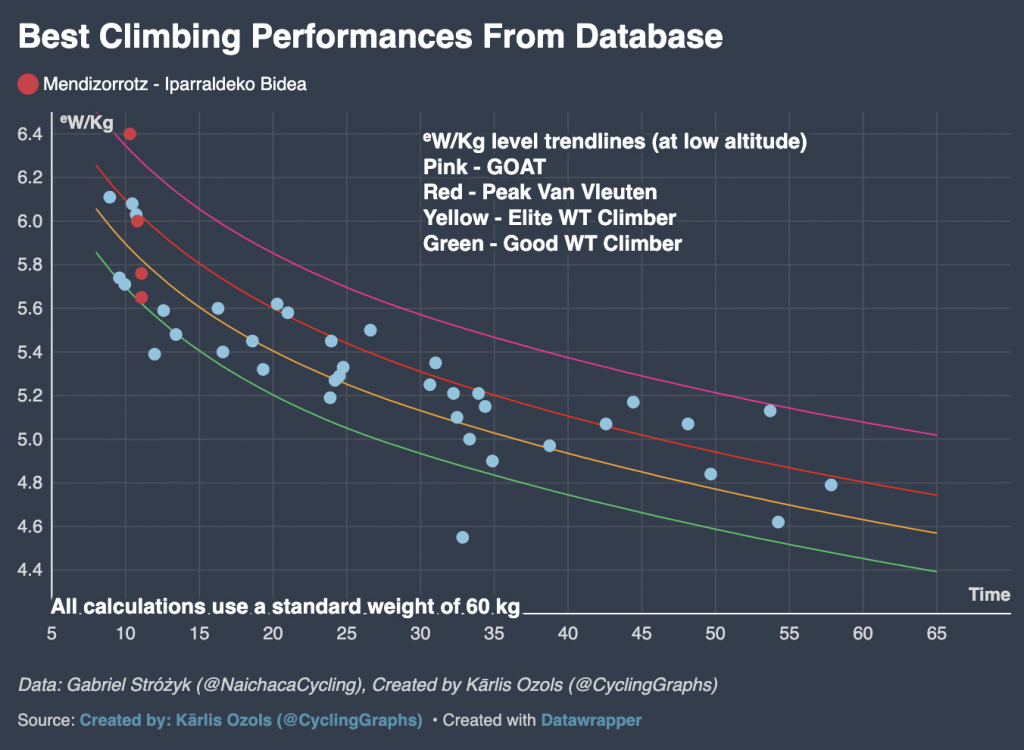
In order to win this TT, we think a rider will need to hit the climb in the TT bars at around 6.2W/kg, which for a 60kg rider is a staggering power of 372W. This, combined with a world class cda of 0.175 on the flat and assumptions that the mechanics are setting the riders up perfectly, leads us to a predicted winning time of 26:37.
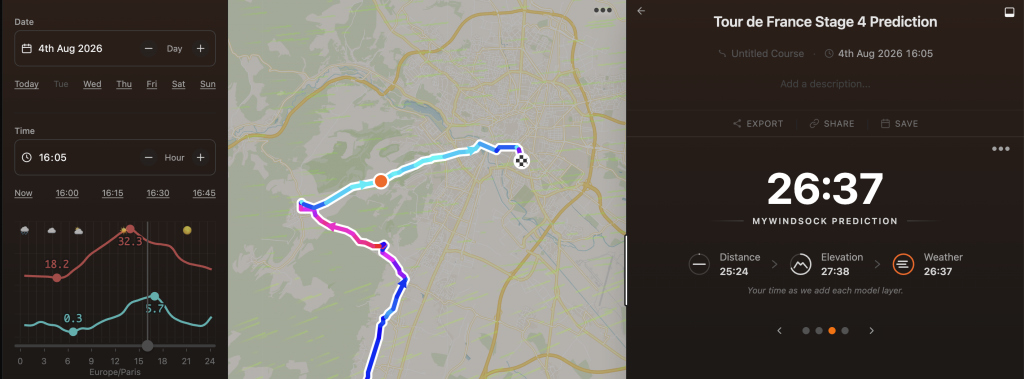
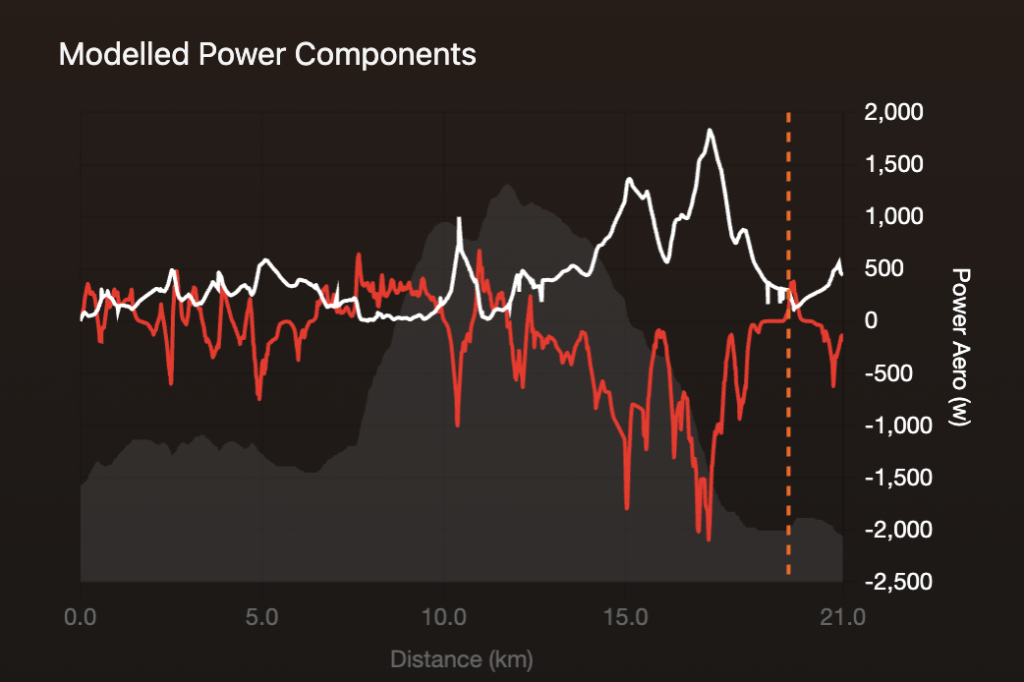
The starting point for this prediction was that, in order to be competitive with the performance of Vollering (assuming she’s here in peak shape), a rider will need to hit 6.2W/kg on the climb without breaking their aero position. They’ll go over their Critical Power and start using up their W’ allowance – essentially emptying the tank over the crest of the climb and holding on toward the finish.
The above time split used a Critical Power of 350W and a W’ of 16kJ for a 60kg rider. This particular pacing strategy leaves that rider with a minimum W’ balance of roughly 2kJ – which tells us there’s scope for a rider to potentially go harder than this on the climb. If this estimate is wrong, we’re forecasting that it’s more likely to be too conservative and it’s possible a rider will go toward the 26 minute mark, though breaking this seems unlikely.
The fact that the finish is tailwind descent also reduces the consequences for imploding on the time, as there’s a a pretty hard limit on the amount of time you can lose on that descent. In fact, if you stop pedalling after the top of the climb, you’d lose less than a minute on the run in to town with this pacing strategy. This means that riders may be more inclined to take a risk in their pacing on the climb, which further increases the chance our prediction will be beaten.
There’s only one time check on course, at 9.7km just before the proper crest of the hill. We should not expect massive swings from the intermediate check to the finish.
Riders hoping to be in the overall GC battle will need to ride the course under 28 minutes. This will limit their losses to around 90 seconds, anything more than that and you’re pretty much fully out the game. Race day conditions currently point to net tailwind for most of the TT which will help limit the losses of the weaker time trialists.
Join the many professional cyclists and teams using myWindsock to prepare here!
