
 UK Time Trial Events




It’s well understood in cycling circles how good you need to be to win World Tour men’s races with a summit finish, but the data as to how fast you need to ride up a hill in the women’s field is a little more sparse and not reported on as widely. In 2026, the Tour de France Femmes goes up Mont Ventoux and the QOM on Strava is currently held by Illi Gardener with a time of 57:35. While Illi isn’t a World Tour rider, she’s an extremely accomplished climber having won the British Hill Climb Championships three times. As such, we can expect a similar-ish time from the fastest women in the Tour de France Femmes this year.
Mont Ventoux – The Segment
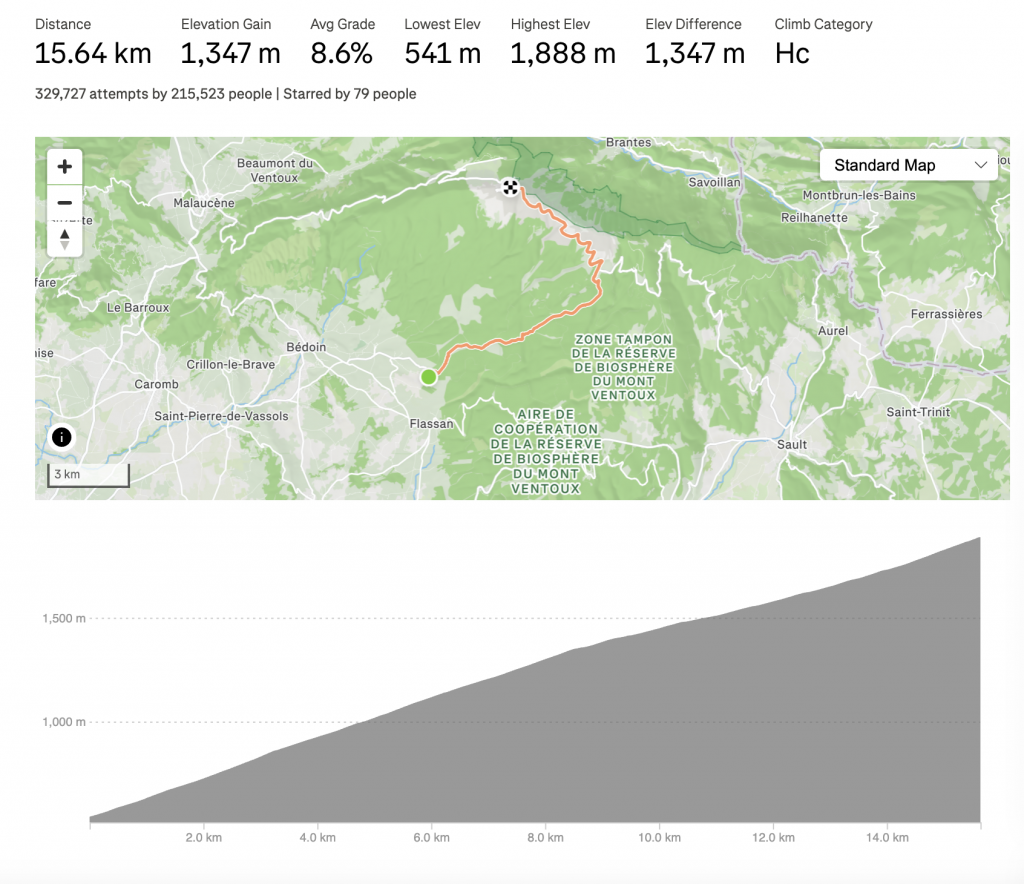
The QOM has a VAM (a measure of climbing speed) of almost exactly 1400m/hr. We can see the peak climbing performances from the women’s world tour mapped below.
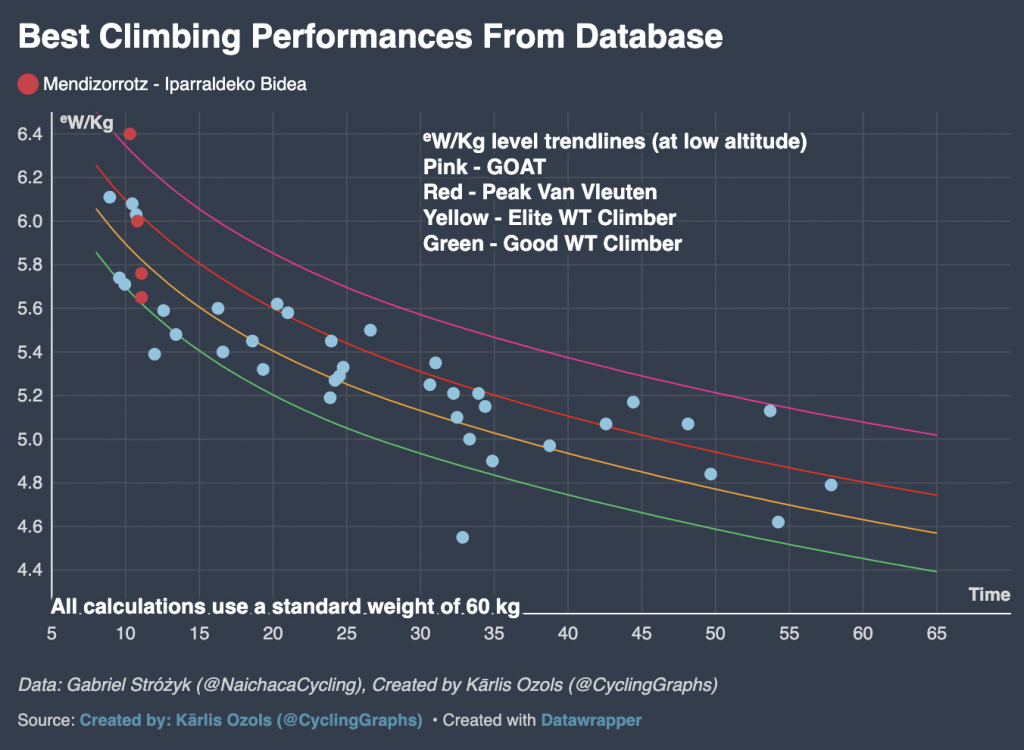
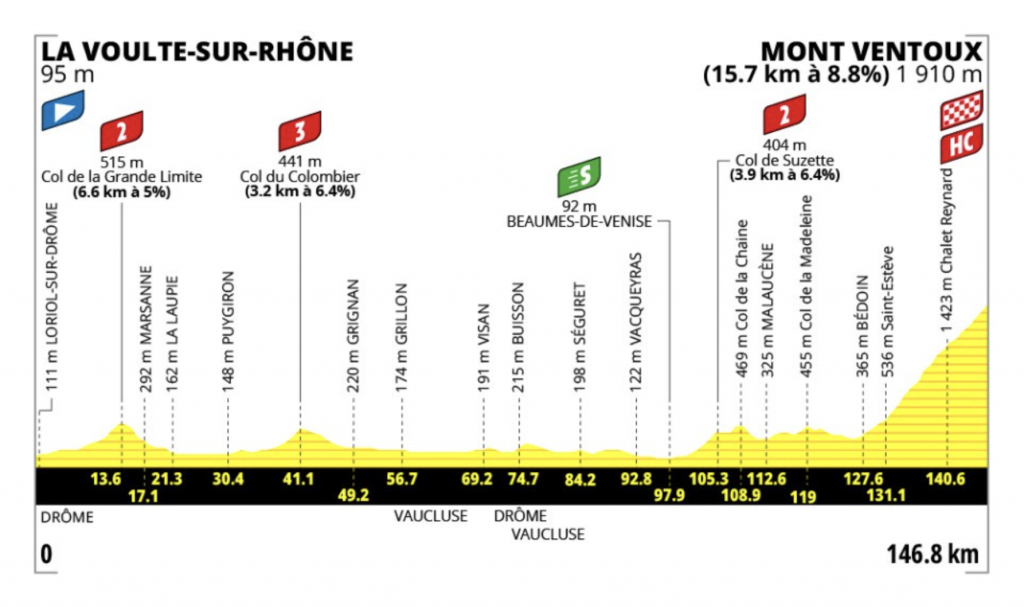
A power to weight ratio of 5W/kg on 8.6% will lead to a VAM of (wind dependent, of course) around 1600m/hr, which will lead to a climbing time in the 50-52 minute range though this assumes no wind. The stage leading into the climb is pretty straightforward, which will lend itself to fast climbing.
How fast do you need to be?
The following table shows you the power to weight ratio, power at 60kg and the time you might expect to ride the climb on Stage 7 in order to achieve the listed results. We are assuming that, as is the case each year, the level continues to rise and it’ll take an all time great climbing performance to win the stage. For a climb of this length, that’ll be around 5.1W/kg to win the stage.
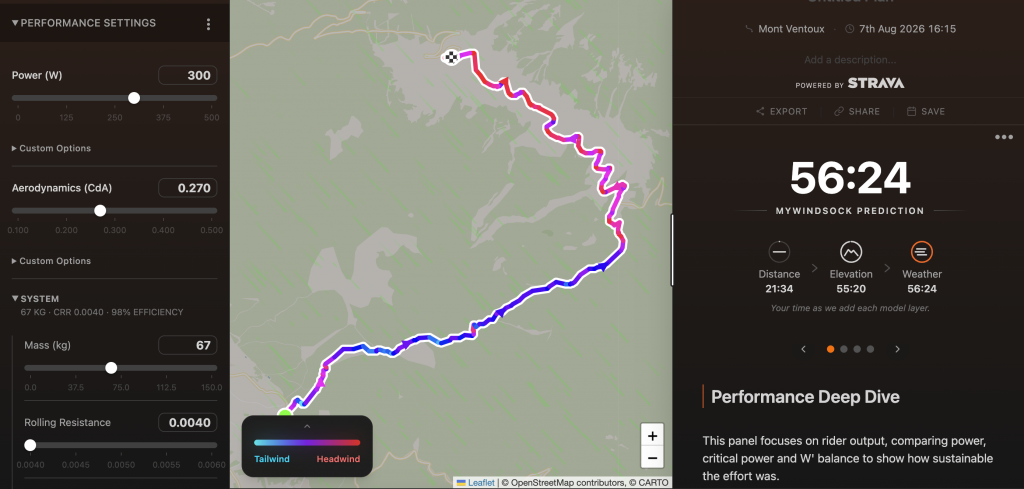
| To win | 5.1W/kg | 306W | 56:24 |
| Top 20 on the stage | 4.7 W/kg | 282W | 1:00:01 |
| Top half of the field | 4.5 W/kg | 270W | 1:02:06 |
All in, if you’re riding a climb of around an hour in length above 4.5W/kg, you’ve got what it takes to get round in a mountain stage of the Tour de France Femmes, presuming your bike handling and race sense is up to scratch. In order to win a mountain top finish you’re likely having to ride an hour long climb at or in excess of 5W/kg.
Top teams and riders will be using myWindsock to prepare for the stage. You can too by clicking here.
