
 UK Time Trial Events




Club TTs are a fun affair. Collecting numbers out the back of someone’s car, pinning each other in a freezing cold car park, handing over cash and lining up in a lay-by. To the uninitiated, it could look a bit odd. Recently, there was a club TT in my village so I can attest to this as my dad looked extremely confused holding my coat before I started. I have heard riders complain about the futility of club events, saying they’re pointless. I couldn’t disagree more. This is an instruction guide about how you can make the most out of your next club TT.
Do it on your training set up, do it tired
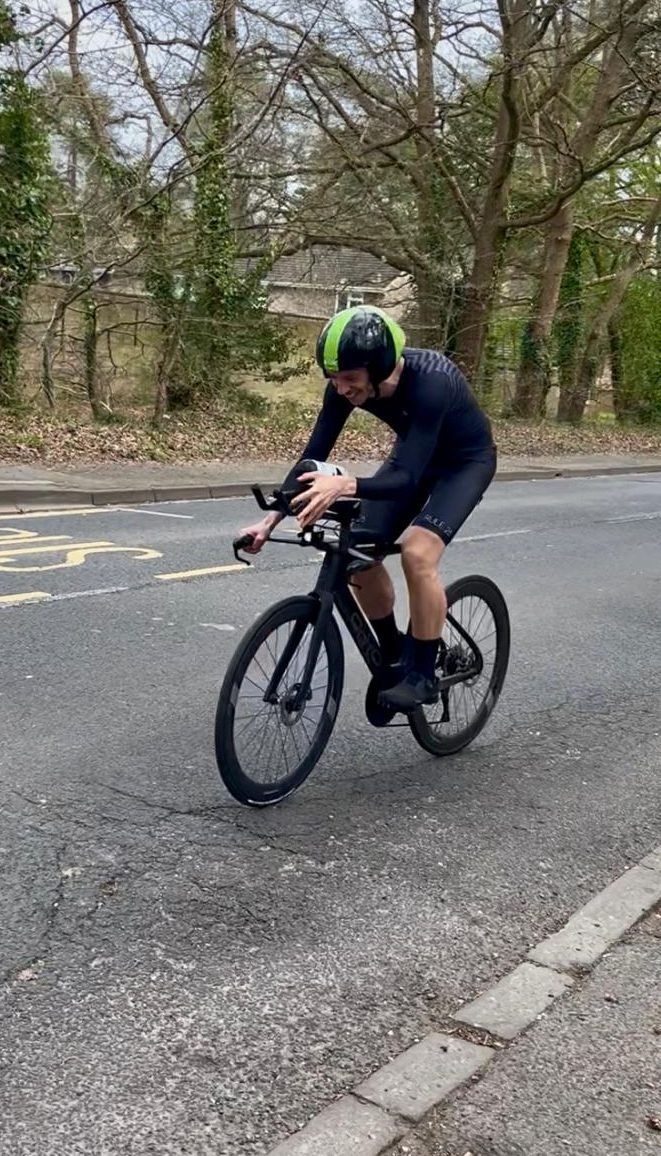
Lots of riders turned up to this race on a training set up, I did my Sunday ride before the TT and headed over after 4 hours on the bike and a couple of other riders were doing similar. Some riders may view this as doing a race by half measure, the antithesis of the approach taken by many time trialists but there’s two main advantages:
- Reduce your pre race admin
Time Trials are an administratively heavy form of cycling, but not a club TT. Just roll up on your training wheels and bash round as fast as you can. Rough and ready!
- Race under fatigue
If you’re like me and prefer a longer time trial to a ten, doing a ten mile TT at the end of a longer ride is a great training session to work on that durability for the 50 and 100 mile races later in the year.
Collect data
A club TT is a good opportunity to try race pace, in position, going similar speeds to what you might in an event that you’re targeting.
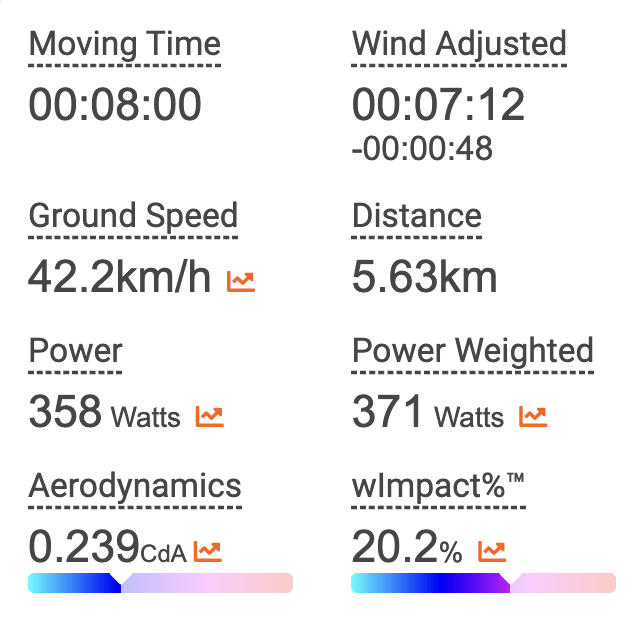
From the above section we can see that my cda is 0.239, now let’s imagine a rider with these numbers has a desire to ride sub 20 minutes for a 10 mile TT this year. Using these numbers, plus a little creative accounting for a disc wheel and a race chain (let’s imagine our race set up is 5% faster so our 0.239 goes to 0.227) we can see how it’ll look on a course that’s being used as an open 10 this coming weekend.
For this demonstration, I’ve chosen the West Kent Open 10 course, the Q10/24. Using my numbers from the club TT, I would be able to ride a 21:05 on this course.
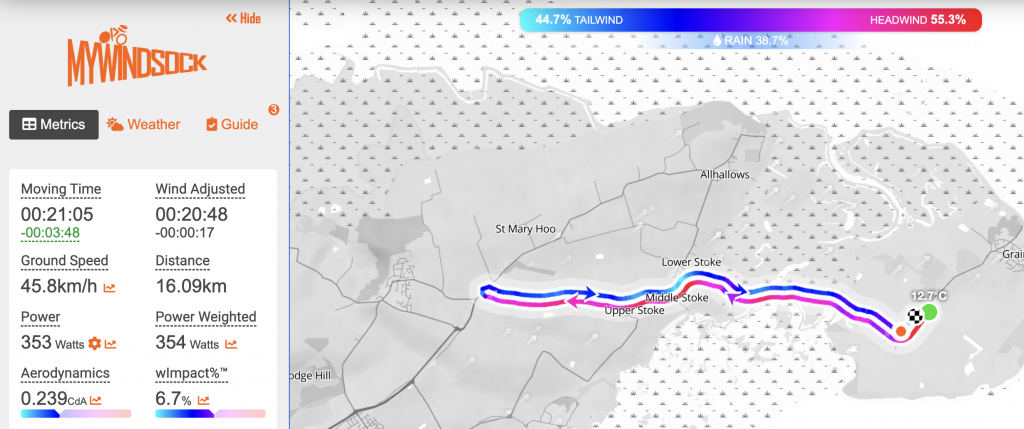
I should adjust my expectations a little and aim instead for sub 21 minutes rather than sub 20. However, we forgot to add the race kit and adjust our cda to our new estimate of 0.227. Let’s see what happens to the new estimate? Any chance of sub 20?
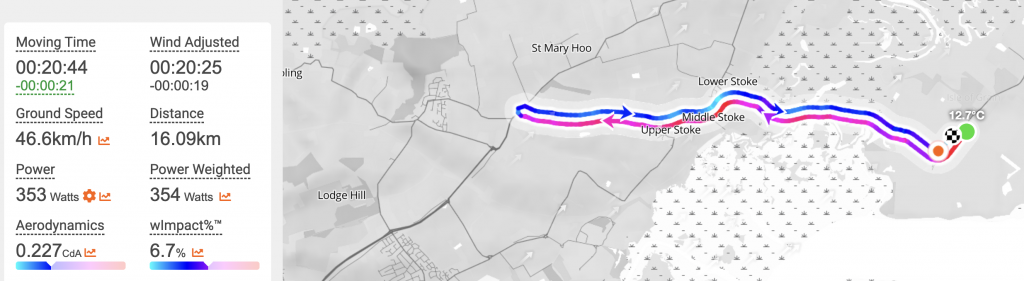
This gives us an adjusted expectation to go into the next race with, however, and it all came directly from the calculations based off the club 10 that we took part in. We made the most of the club 10, and when I’m 30-45s off my target pace at the open I won’t be too upset as I had a great idea of where I was at thanks to the information collected from the club TT.
Lesson here: Sign up to your local club TT!
Be prepared for your next time trial with myWindsock.
