
 UK Time Trial Events




Those of you reading this in the UK will, undoubtedly, have had multiple occasions in your life where you’ve wished it was possible for you to change the weather. Well, we have good news for you. For the low price of your annual myWindsock subscription you will now be granted this power. Here’s how…
- Open up myWindsock’s Surface platform
- Scroll down the panel on the left hand side of the screen
- Click on the “Weather Override” drop down menu option
- Input values to change the weather
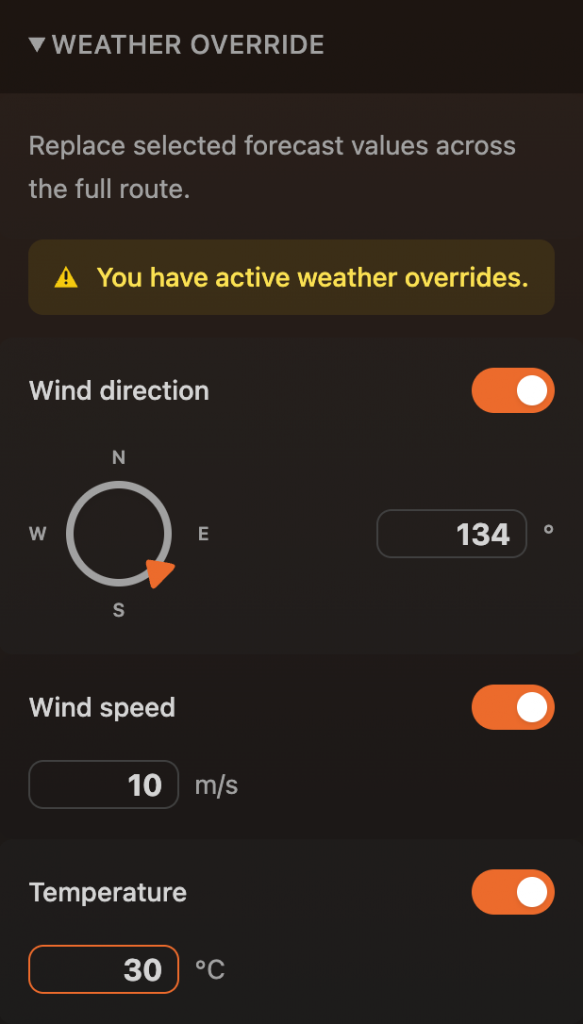
Unfortunately, for legal reasons, we are only able to change the weather within the course simulation on myWindsock, we are not able to adjust the weather outside. That said, it’s still interesting…
You go faster when it’s hot
The human body doesn’t love hot temperatures, especially a British one. That said, there’s an offset – as the air resistance of a bicycle decreases when it warms up so you need to produce less power to go the same speed. Bare with us while we do a little bit of maths.
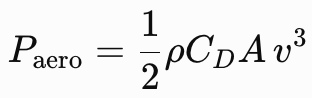
Now, air is made up of tiny little particles, mostly:
- Nitrogen molecules ((N_2)) — 78%
- Oxygen molecules ((O_2)) — 21%
- Argon atoms ((Ar)) — 0.9%
- Carbon dioxide molecules ((CO_2)) — 0.04%
- Water vapour molecules ((H_2O)) — variable
When it gets really hot, all of these particles whizz around quite a bit faster which means in every cubic meter of air, there’s actually less particles than when they’re moving slowly. When you’re cycling, you have to push each of these particles out of the way – that pushing is the force we feel from the wind and we call it “air resistance”.
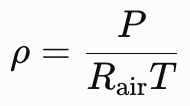
This is why you go faster when it’s hot. In real life, the temperature does impact your ability to produce power. But on myWindsock – we can just pretend that isn’t the case…
How hot does it need to be for me to break the Poggio KOM?
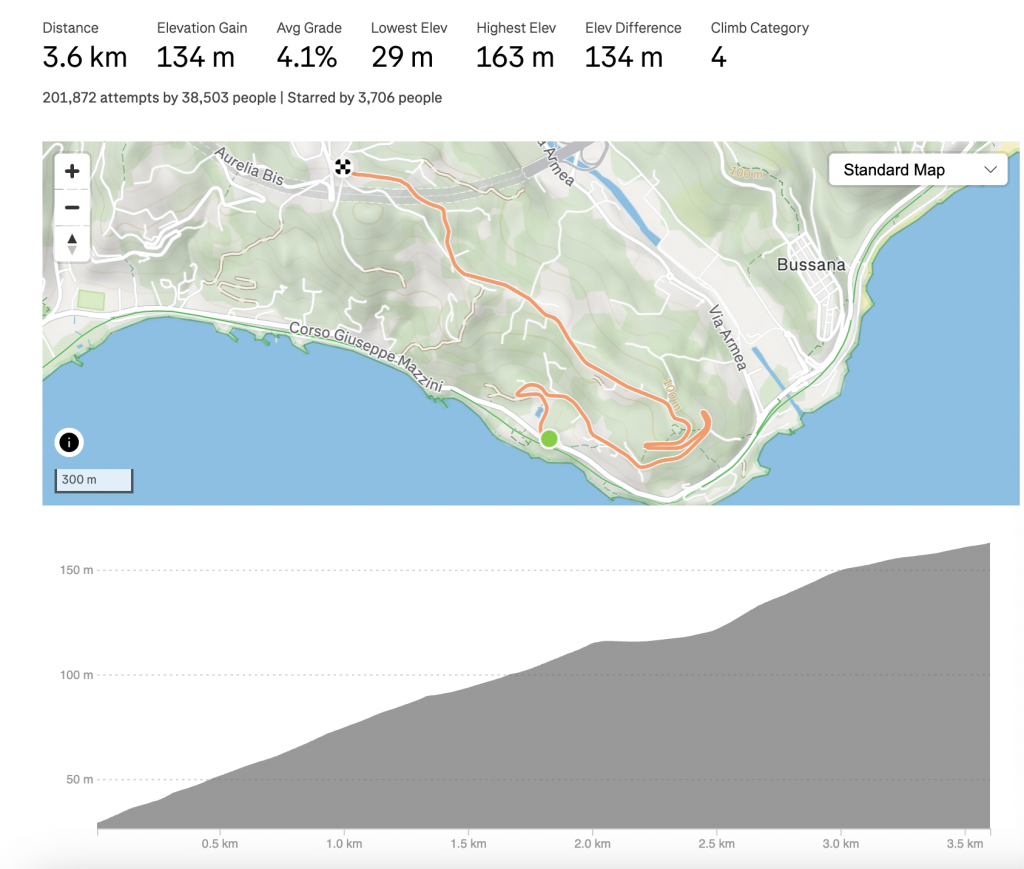
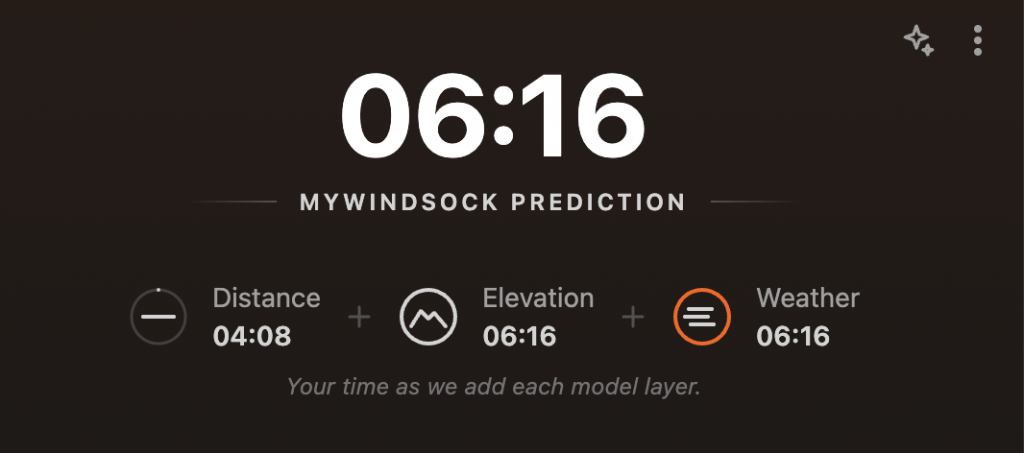
As we’ve already discussed, air resistance decreases when the temperature goes up. That means, you ride faster for the same watts. Imagine a 76kg rider on a 6.8kg bike doing 500W on this climb in a relatively aerodynamic road bike position, with a cda of 0.23 on a windless day that’s 30 degrees. This is 6.5W/kg for around 6 minutes, so pretty good but not alien level world tour numbers.
Getting the perfect day
We are now going to calculate the conditions required for our imaginary rider to get the KOM on this climb. We will start with the wind…
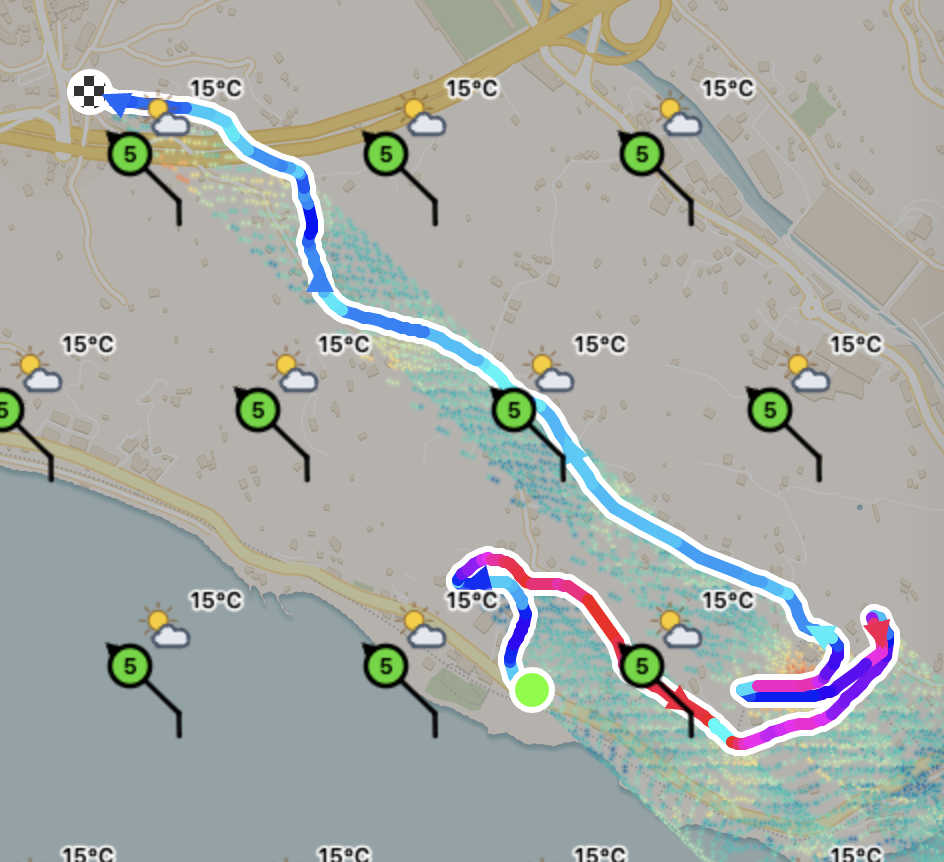
| Wind Speed (m/s) | Segment Time (min:sec) |
| 0 | 6:16 |
| 5 | 6:09 |
| 10 | 6:07 |
| 15 | 6:12 |
We need to find 37 seconds to get that time down to 5:30. We will use our optimised wind direction and wind speed to increase the temperature until we find that extra 37 seconds.
| Temp (degrees C) | Segment Time (min:sec) |
| 30 | 6:07 |
| 40 | 6:05 |
| 100 | 6:00 |
It turns out, a regular human has absolutely no chance competing on the Poggio with Ganna or Pogacar. Ah well, we tried.
