
 UK Time Trial Events





It’s November which means it’s goal setting season. Today we’re going to talk to you about how to use myWindsock, your winter training and your past performances to achieve your goals next year. These tips will apply to time trialists, Ironman cyclists or anyone with a time specific goal on their bike.
You will need a bicycle with a power meter, a bicycle computer and an active myWindsock subscription in order to follow this process to achieve whatever it is you’re trying to achieve.
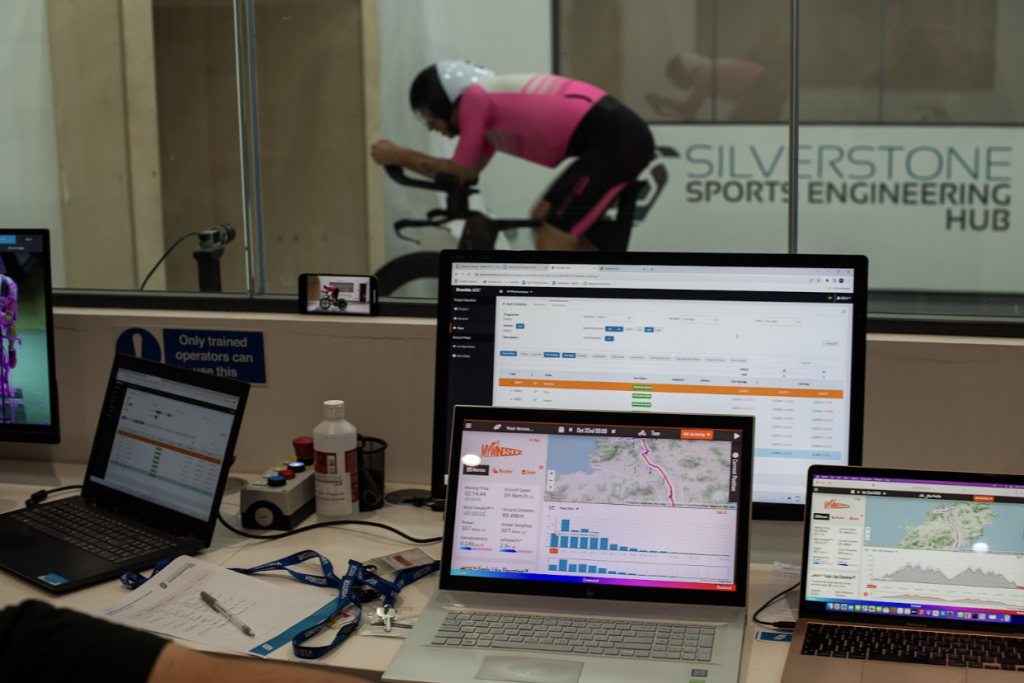
The process for achieving anything starts with deciding what it is that you want to achieve. It needs to be a realistic progression from something you already have achieved – but can still be ambitious. If you have ridden a 22 minute 10 mile TT, then a sub 20 is a realistic goal given enough time and a decent plan. If you are yet to break 5 hours for an Ironman bike split, don’t set yourself the goal of breaking 4 hours. A good guide is to say your goal out loud, it should sound slightly scary but not ridiculous, if people laugh in your face, you might be on the ambitious side of realistic.
Figure out what it takes to achieve your goal, then analyse the gap in order to get there (consultants and fancy coaches call this a “GAP” analysis). You can use myWindsock to do this.
An example of the GAP analysis process
Let’s take an example. Imagine you’re a time triallist who has, this summer, completed a 10-mile time trial in 21:39, averaging 350W. You’ve decided that your goal for next season is to break the 20-minute barrier.
The first thing we need to do is understand what that actually requires. A 21:39 10-mile TT equates to an average speed of approximately 44.5 km/h. To break 20 minutes, you’ll need to average more than 48.3 km/h. That’s an 8.3% increase in speed, which is a pretty substantial improvement. That said, an 8.3% improvement from December to July is just over 1% each month which feels much more achievable.
We need to understand exactly what is limiting your performance and what needs to change.
Using your existing ride data, myWindsock estimates your CdA, you set your rolling resistance and other variables that influence your performance.
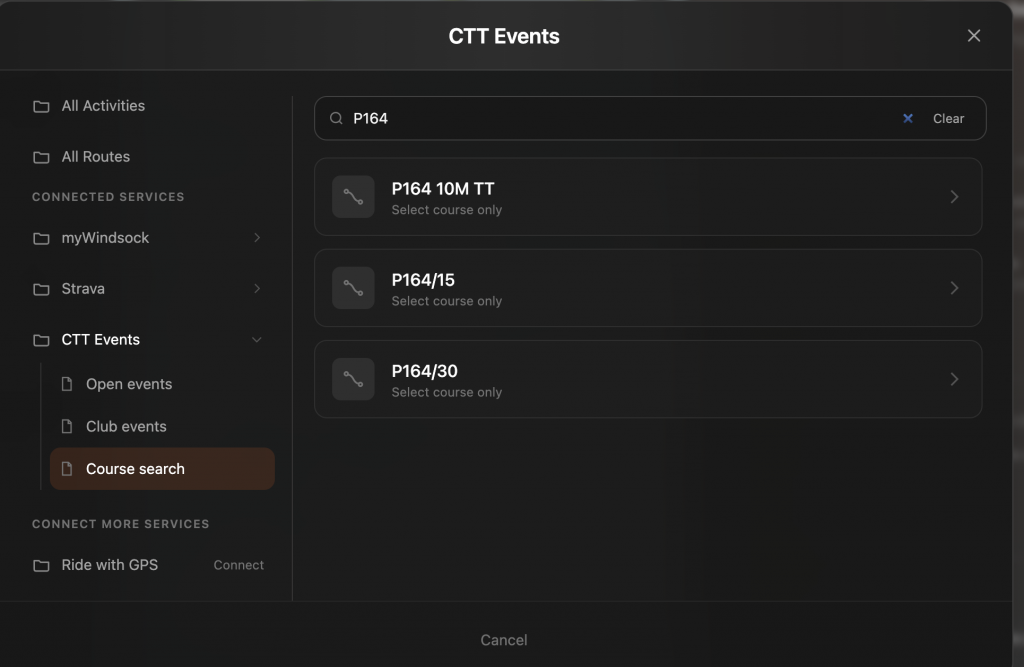
You can select a range of TT courses and see what values (either aerodynamic, weather or power) it’ll take to break 20 minutes on each, and how far away this required level is from what you’ve achieved in the past. For example, if you achieved this 21:39 on a slower course with lots of corners, you can compare the equivalent conditions on a fast out and back course. This might help you better evaluate the GAP, as it may not be as big as it first appears.
For example, perhaps MWS suggests that you would need to produce around 380W to break 20 minutes on a faster course if your aerodynamics remained unchanged. That’s a significant increase from 350W, and potentially an unrealistic physiological target over a single winter of training though it’s not unheard of to gain 30W over one winter. What if you could reduce your aerodynamic drag by 30W instead? This might be more, or less, realistic than 30W of power gains depending on the rider.
These are the sorts of questions we want to answer before we start training. Rather than blindly chasing a higher Critical Power, we can identify the specific performance improvements that will have the biggest impact on achieving our goal. For example, it might be worth sacrificing some interval power for an aerodynamic drills session in the mirror on the turbo over winter.
The key is to establish the exact gap and come up with a way to easily measure progress, then we can start working out how to close it. If your analysis suggests that power is your biggest limitation, your winter training should reflect that. If aerodynamics is the biggest opportunity, perhaps it’s time to spend some money in the wind tunnel or start experimenting with your position. Most likely, it’ll be a combination of the two.
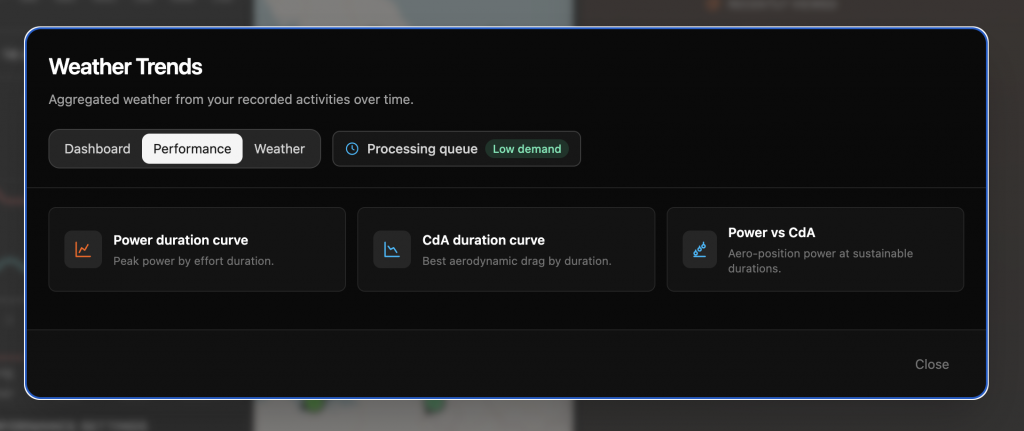
The key takeaway is that your goals for next season should be based on what you’ve already achieved, what your current performance capabilities are, and exactly what needs to change to go faster.
myWindsock brings all of this together in one place. You can analyse your previous performances, understand your current power and aerodynamic capabilities, identify the power and CdA required to achieve your target, compare different courses and weather conditions, and track your progress towards closing the gap throughout winter.
Whether that’s improving your Critical Power, refining your position, investing in better equipment or simply finding a faster course, myWindsock gives you the data to make informed decisions about where to spend your time and money.
So before you start planning next season’s training, spend some time understanding what it will actually take to achieve your goals.
- Set the target
2. Understand the gap
3. Use myWindsock to close it.
