
 UK Time Trial Events




As you ride, both wind speed and wind direction shift relative to you, meaning one of the key factors in aerodynamics—the yaw angle—rarely stays consistent for long. Despite this, manufacturers often claim they have optimised their designs for particular yaw angle ranges. Some even argue that certain tube and rim shapes can behave like sails, helping to push the bike forward when the wind strikes from the right angle. Data from myWindsock shows us that over most rides, races or training, that yaw angle changes constantly. We thought we’d write a blog that tells you what Yaw angle is and how it can impact your aerodynamics.
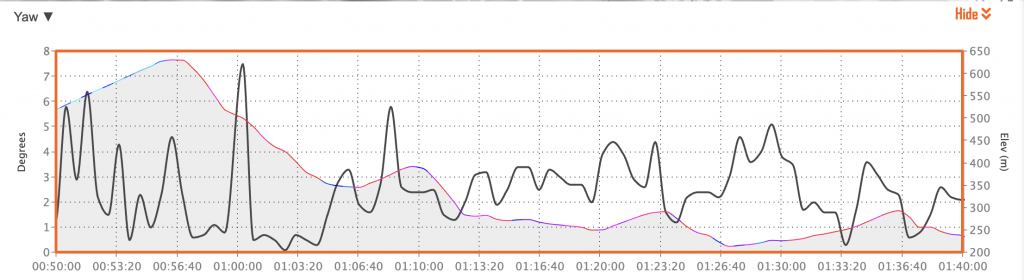
What is Yaw Angle?
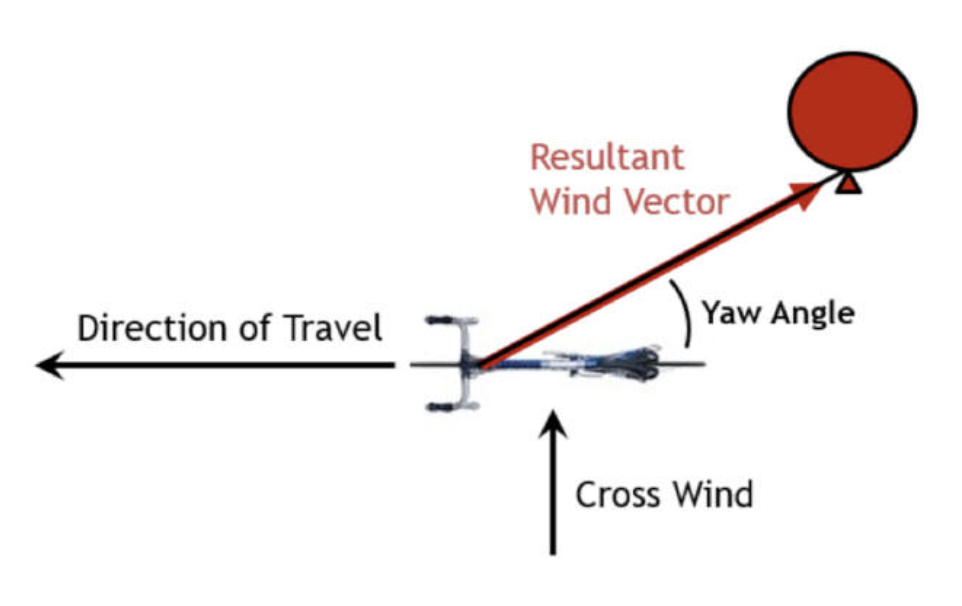
In cycling aerodynamics, yaw angle is the angle between the rider’s direction of travel and the apparent wind (the vector sum of the rider’s forward speed and the true wind). A yaw angle of 0° means the wind hits the rider directly head-on, while higher positive or negative yaw angles occur when crosswinds shift the apparent wind sideways relative to the bike’s path. That is to say “what direction does it feel like the wind is coming from relative to my direction of motion?”.
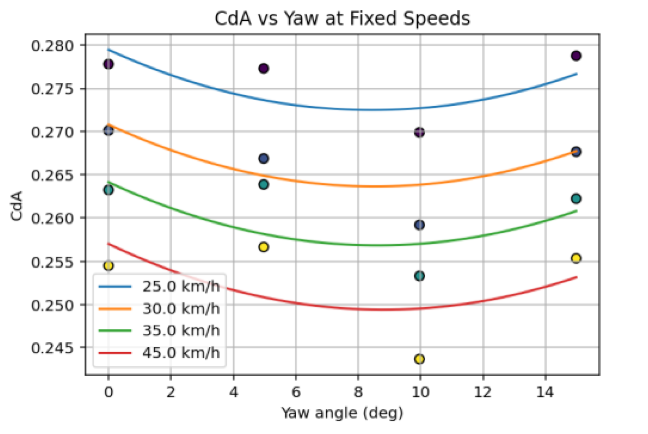
In this blog we wrote a little about the idea of “yaw dependent” cda, that is to say that your aerodynamic properties are dependent on the angle the wind comes from.
How does all this impact my forecasts?
It’s early TT season as we write this and while this is a difficult time to get new PBs, it’s a great time of year for data gathering. One useful piece of information you can gain from this time of year is how the wind can impact your cda and while obtaining granular yaw dependent cda is tricky, but not impossible, with myWindsock you can very easily get an idea of whether you’re particularly “un-aerodynamic” on windy days.
This will help improve the accuracy of your forecasts which will allow you to preserve your biggest performances for days when a PB is more likely.
