
 UK Time Trial Events




It’s become less fashionable a term recently, on account of its horrific overuse, but marginal gains is the idea that if you make incremental improvements to your setup or training that it will add up to something significant. It was popularised in the early 2010s by Team Sky (now INEOS) back when they used to win stuff.
Recently, I’ve been on a bit of a buying spree for my TT bike and have been thoughtfully shopping – aiming to prioritise by Watts saved per pound spent, but while doing this I realised that the thing that matters really is time saved per pound spent.
The marginal gains we will test in today’s simulation will be…
- Switching from GP5000 to GP5000 TT, both with latex inner tubes
Independent tests of this set up have shown an improvement of around 1-4W per tyre. - Removing the front derailleur and switching to one chainring
This could save, again, between 1 and 4W in aerodynamic savings. - Adding an aero OSPW system
This has a claimed saving of 2.4W relative to a dura ace set up. - Using a super slippery waxed chain
Wattshop claim their ‘Cratus’ waxed chain can save 3-5W compared to a standard clean chain. - Very moderate weight savings
Using a combination of factors, I’ve also managed to shave 650g off my set up and body weight.
Before we get started here, it’s worth noting that all of these claims are probably wrong in the context of this specific simulation with this specific setup. However, that’s not really the point of this blog. It’s actually to answer the question of “We know you can accumulate meaningful savings but how much of a difference does it actually make?”
The first step we’ll do is run each saving individually and then finally, we’ll put them all together and see the time difference between the standard set up plus all the marginal gains.
It’s worth noting that aerodynamic savings scale with speed whereas rolling and drive train resistance savings remain more stable (they’re not actually constant, but for the simplicity of our model approximating them as constant yields acceptable results).
We will assume that, for the sake of simplicity, saving 1W is the equivalent of riding 1W harder – this is not actually true (as 1W saved at 30kph might be 3W or something at 50kph) so, if anything, this is likely to underestimate the time savings from our marginal gains – especially the aero ones. That said, it makes the simulation much simpler to carry out – so we will make the assumption none the less.
The final assumption we’ll make here is that our rider is riding at a constant power of 300W – this is not realistic, or optimal, but makes it easier to isolate changes so we’ll do this for illustrative purposes. At the end, we’ll have a perfectly paced simulation – centred around 300W.
Standard Set Up
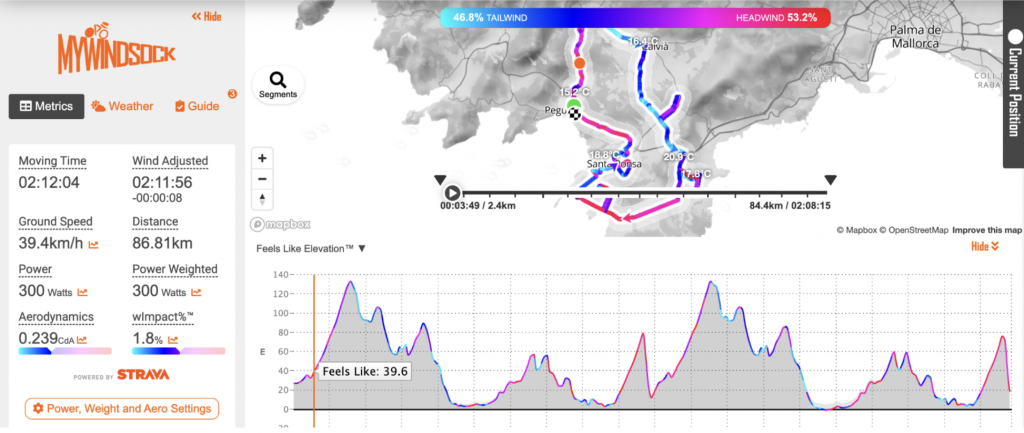
After each run, we’ll reset the simulation to the original conditions so when you see a time saving, it’s with respect to our baseline set up.
Weight Savings
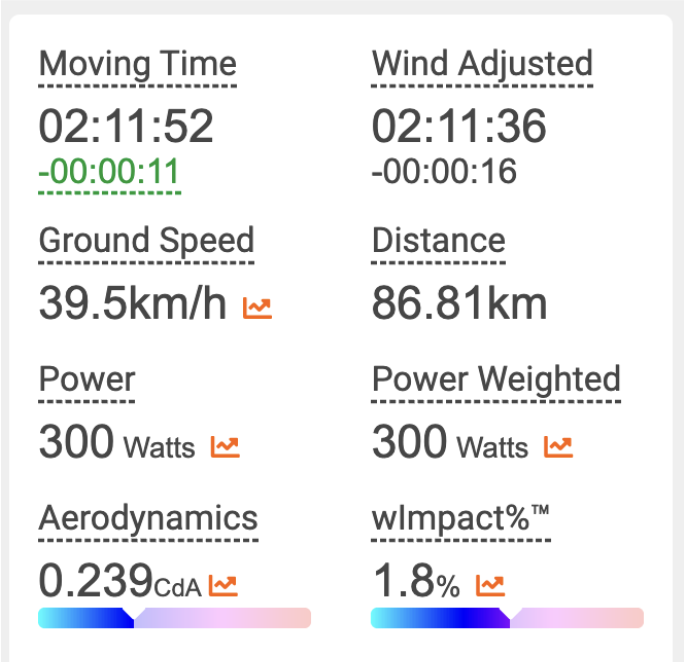
As we’ve saved 650g – that’s about 0.7% of our total system mass, we might see a gain in speed as a result of this, considering it’s a pretty punchy circuit. Let’s run the simulation taking 650g off our set up and see what happens.
Waxing our chain
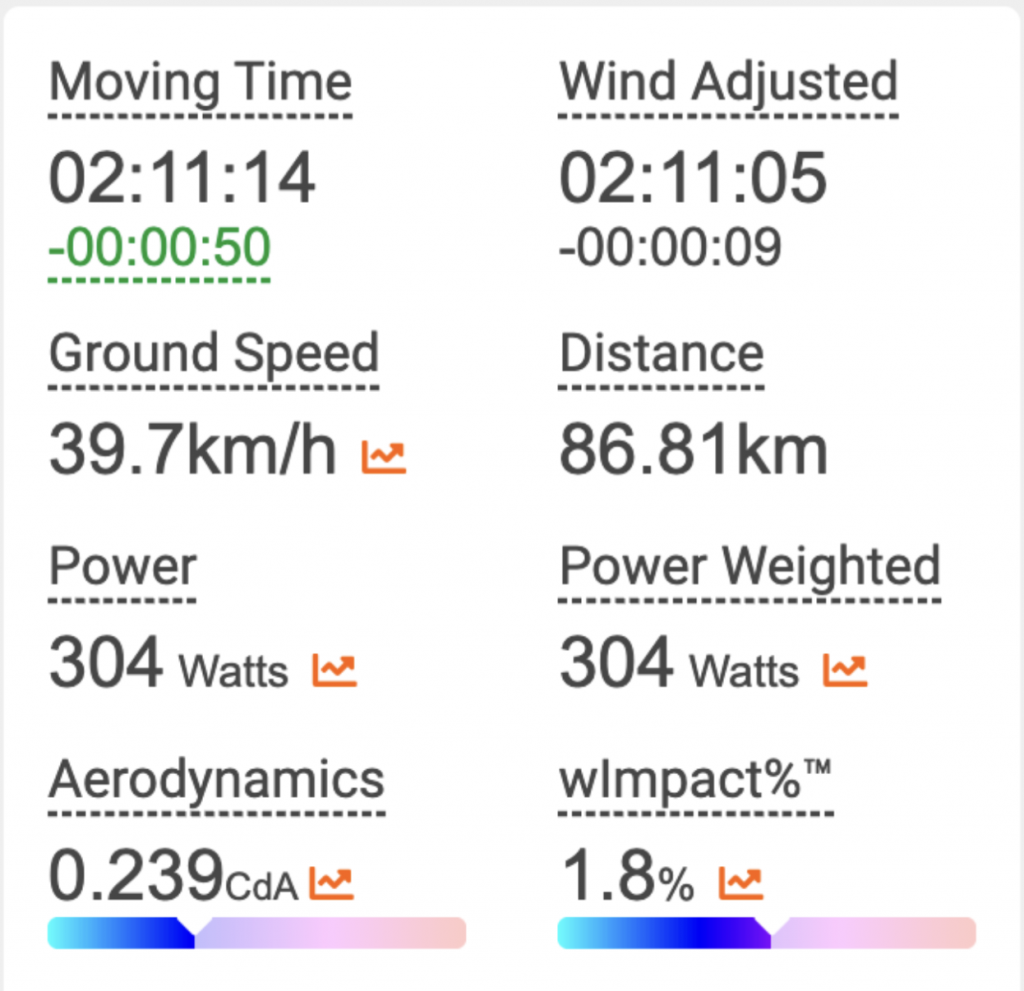
Let’s see if the Wattshop waxed chain, with a saving of 3-5W (we will use 4W) can save us a decent amount of time…
Oversize Pulley Wheel
Going “one-by”
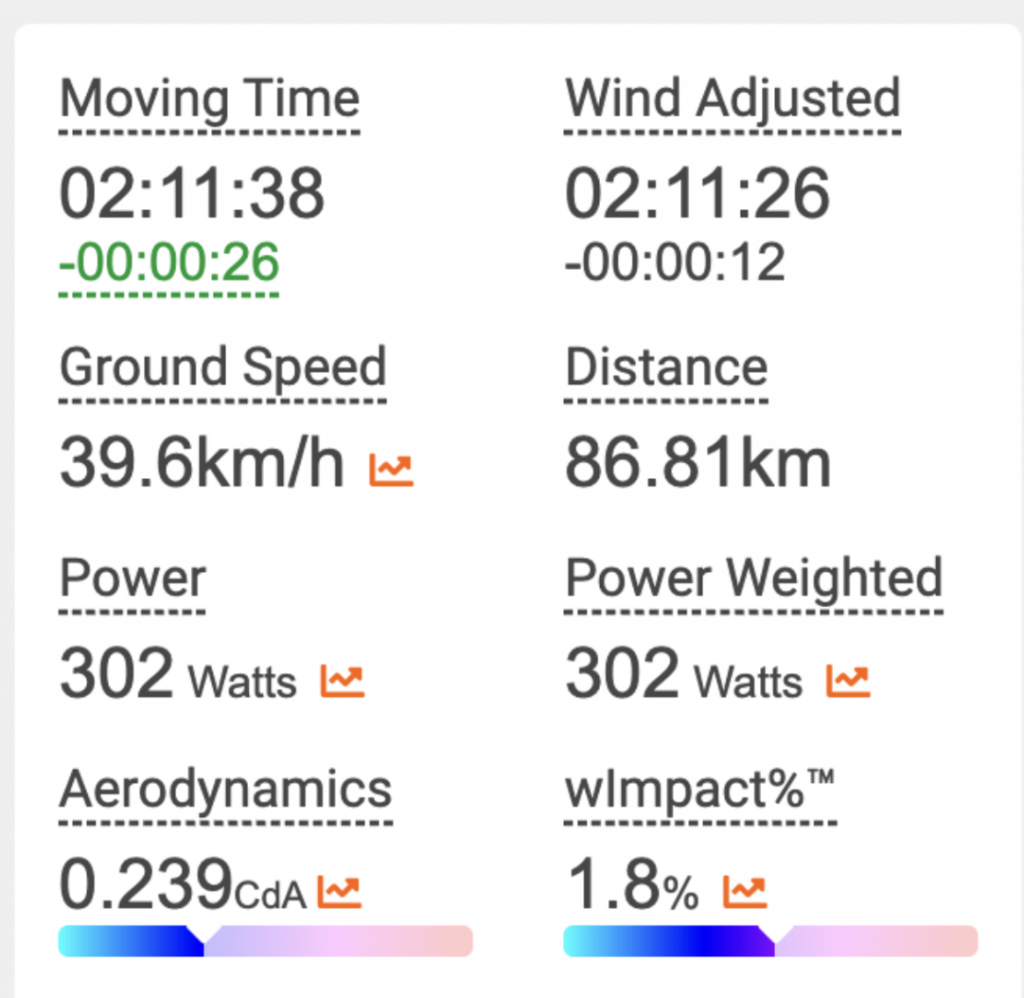
Typically, the 1X chainring’s aero savings are dependent on yaw angle but savings between 1 and 4W are common. As such, we’ll see a saving of around 35s here.
Fresh Tyres
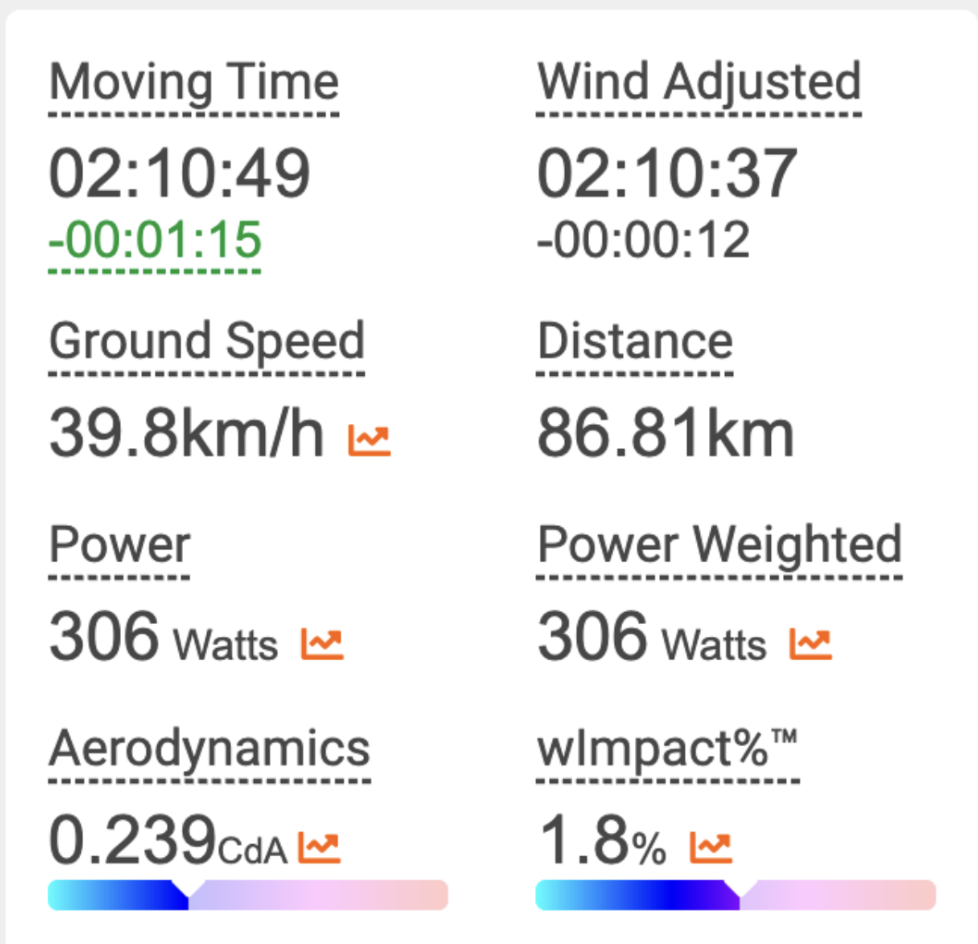
This is actually one of the most interesting examples of non-obvious speed improvements. Independent testing has shown the difference to be about 3W per tyre – so a total saving of 6W. Running a simulation with a 6W boost in power we see this…
All together
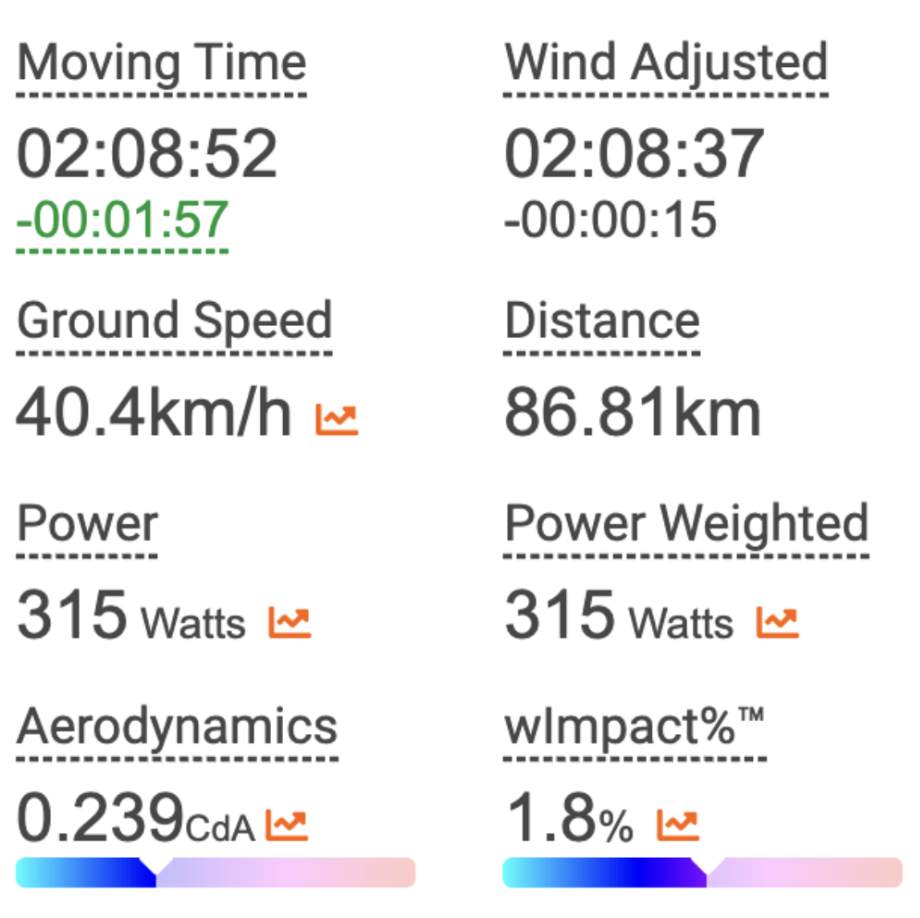
In total, these savings add up to 15W (plus our 650g) saving.
Marginal gains AND perfect pacing…
That’s not the end of it though, we all know that riding a course (especially one that’s hilly) with a flat power is not the fastest way to do it.
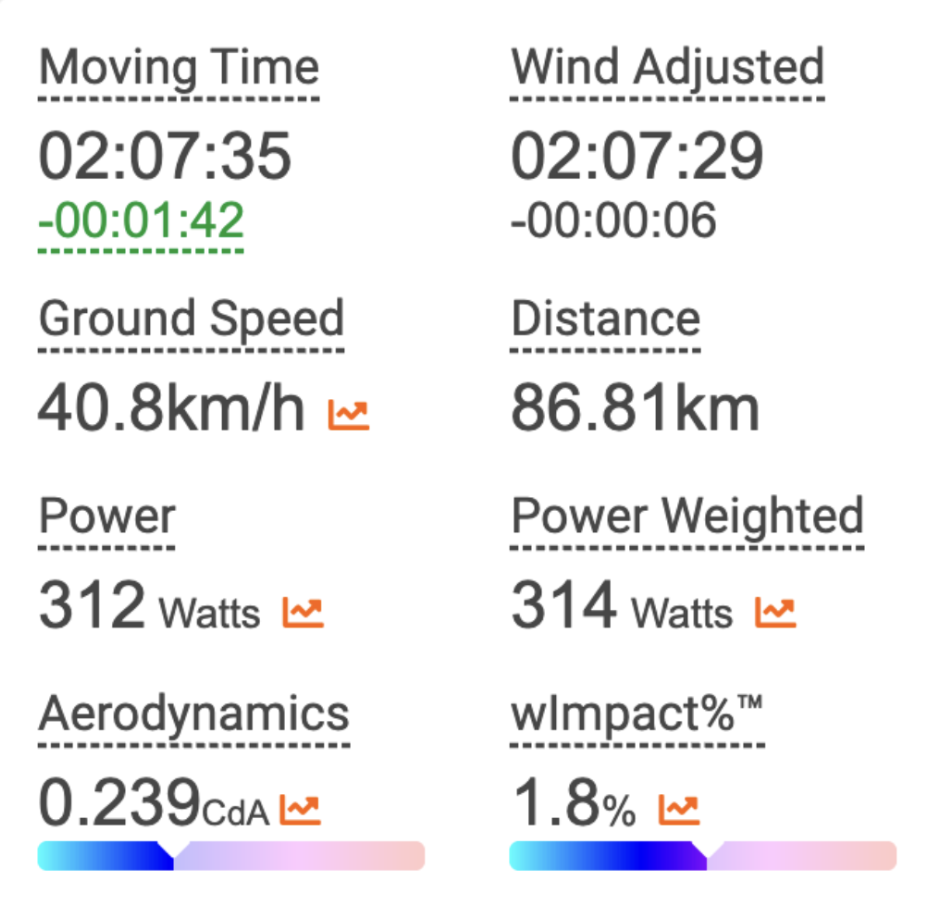
You can optimise your pacing for a £20 a year myWindsock subscription, which costs you 19.6p/second saved.
As much as it pains us to say (not at all, we love it), marginal gains really do add up, without getting any fitter at all we’ve just saved ourselves almost 4.5 minutes simply by throwing money at the issue and pacing properly.
Save yourself time and money with a myWindsock subscription today.
