
 UK Time Trial Events




“Feed Remco” signs have been popping up on the roadside – so what is an extra kg or two worth on a Tour de France mountain top finish?
In an article in the run up to the Tour de France, Remco Evenepoel gave an interview to a Belgian newspaper in which he said this, “He stayed off the bike for four months. You can’t just make up for something like that. You can get back to a good level relatively quickly, but it’s those last few percentage points that are crucial. For that, you have to be able to train consistently over a long period. We hope that Remco can gain those last two or three percentage points in the coming weeks. We cannot do magic.” He then went on to say, “He is one-and-a-half kilos lighter than last year at this time of year” and made further comments regarding Evenepoel’s weight, clearly it was a big area of focus for him.
At the Tour de France, Evenepoel went on to abandon the race citing that he was “empty” since the end of the last warm up race he competed in before the Tour de France. Evenepoel said that he entered the Tour in poor condition. He said, “After the Dauphiné, I haven’t been able to do a single training session either… I couldn’t handle any intensity. Fatigue, my body simply not being good enough this year… It could be anything, I just can’t pinpoint one thing.” We aren’t diagnosing Remco with anything, but what he says seems to correlate with the symptoms an athlete might feel if they’ve been continuously underfuelling.
This is something myWindsock has been interested in for a long time, as we’ve been absolutely furiously telling everyone for ages that weight doesn’t matter anywhere near as much as air resistance in 99% of circumstances – the line we always use is “as long as you’re not trying to win the Tour de France”, but what if you are?
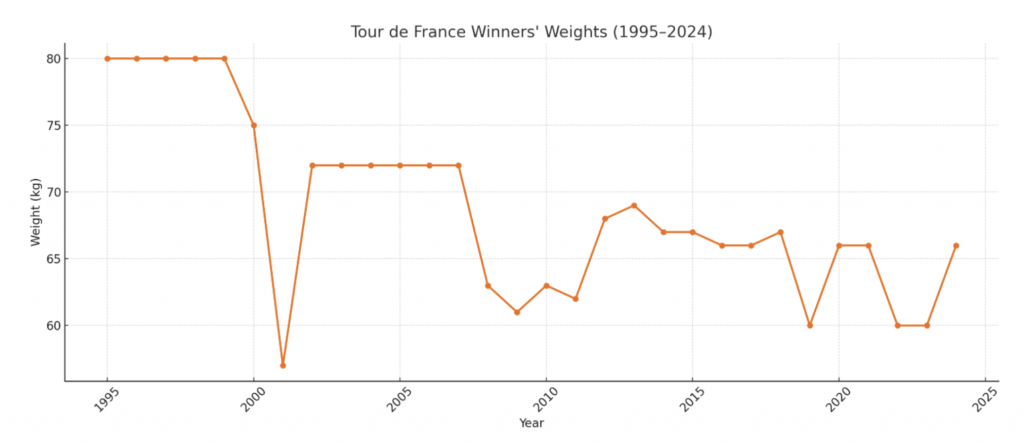
Since 2010, the winners have pretty much always been between 60 and 70kg so this is the weight range we’ll use for all of our analysis. Some of the heavier riders that won the tour between 1995 and 2010 may have had some pharmaceutical assistance – so we will just ignore them.
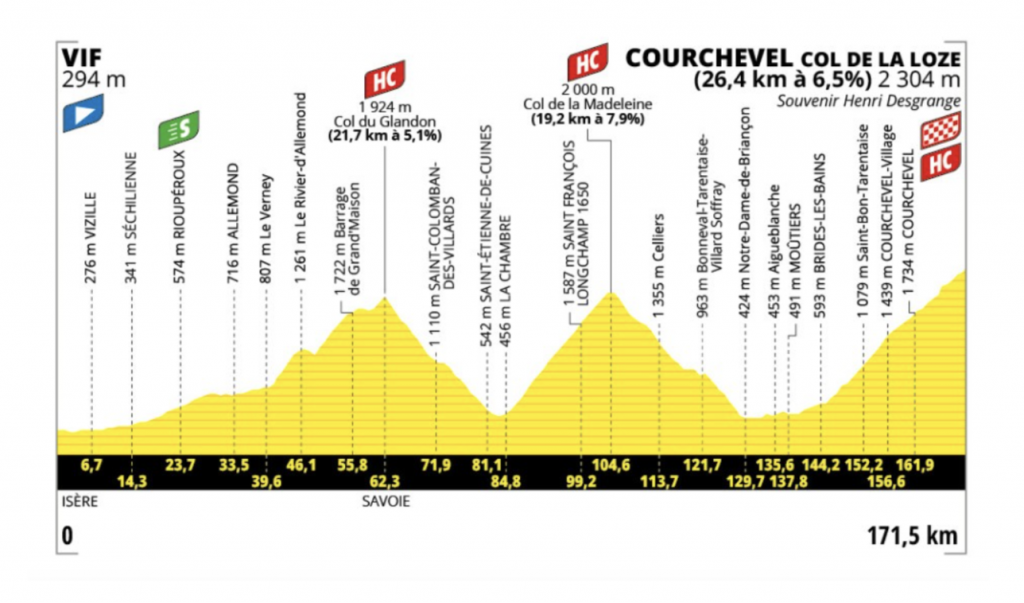
How much does an extra kilogram cost on the Col de la Loze?
Now we have our course, not forgetting that it’s in the context of 21 stages so we should remember that every extra kilo Joule expended needs to be made up at the dinner table.
We will assume a rider is doing 400W and the total weight of their bike and clothes is 6.5kg (this is not realistic but it’s more important to keep constant). As such, we will have our 70kg rider with a system mass of 76.5kg and the 60kg rider with a system mass of 66.5kg. We will keep rolling resistance and drivetrain resistance the same for each virtual rider.
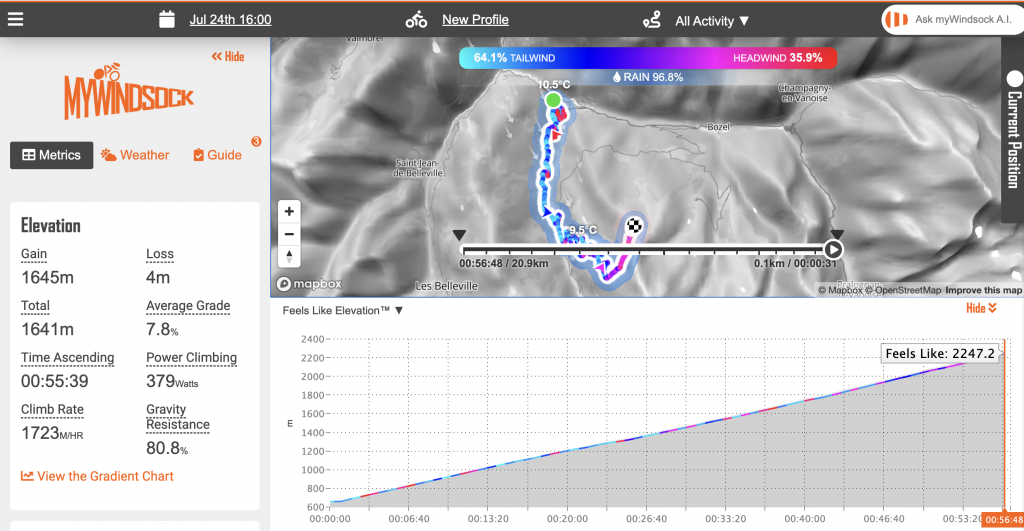
Now we will imagine two scenarios. One where our rider loses 10kg, from 70kg to 60kg, without losing any power, and another where a rider loses 0.5% of their power with each kilogram of bodyweight and model their time on this climb on this basis. We find the following…
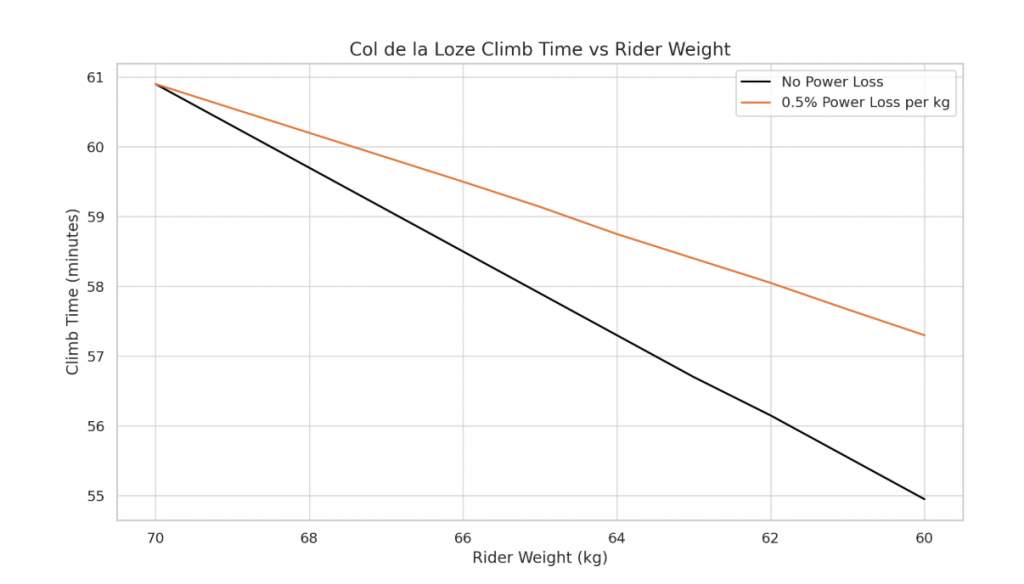
No one is saying that heavier riders go up hill faster, that’s clearly not true. There are hidden risks associated with losing weight and all we are saying is that they’re only worth it up to a point.
Find out what that extra kilogram means on your next ride with myWindsock.
